Fontana di Trevi 1.0
A desk that turns waste paper into creation.
00

problem
In contemporary office environments, paper is still heavily used for sketching, prototyping, and ideation, yet once discarded, it enters a long and inefficient recycling chain. Paper must be collected, transported, processed off-site, and reproduced, consuming time, energy, and resources.At the same time, designers increasingly rely on rapid prototyping tools such as 3D printing, which are often noisy, space-consuming, and separated from daily workspaces. This disconnect interrupts creative flow, fragments the design process, and reinforces wasteful cycles rather than reuse.The office, where paper is created and discarded every day, remains disconnected from its own material lifecycle.
solution
Fontana di Trevi 1.0 proposes an integrated desk that reconnects paper waste, material transformation, and creative work within the office itself.By embedding paper shredding, pulp preparation, and 3D printing into a single workstation, discarded paper can be directly transformed into printable material on site. Noise-reduction structures, internal material flow, and modular components allow the system to operate quietly and efficiently within shared workspaces.Rather than treating recycling as a distant industrial process, the desk turns reuse into an immediate, visible, and creative act—allowing paper to continuously re-enter the design cycle where it was first created.
The story of Fontana di Trevi 1.0 begins with a simple question:
what happens to paper after ideas leave the page?
In most offices, paper sketches are scanned, discarded, and forgotten, while physical prototypes are produced elsewhere—far from the moment of inspiration. This separation turns creativity into a fragmented process, where materials move away from designers rather than evolving with them.
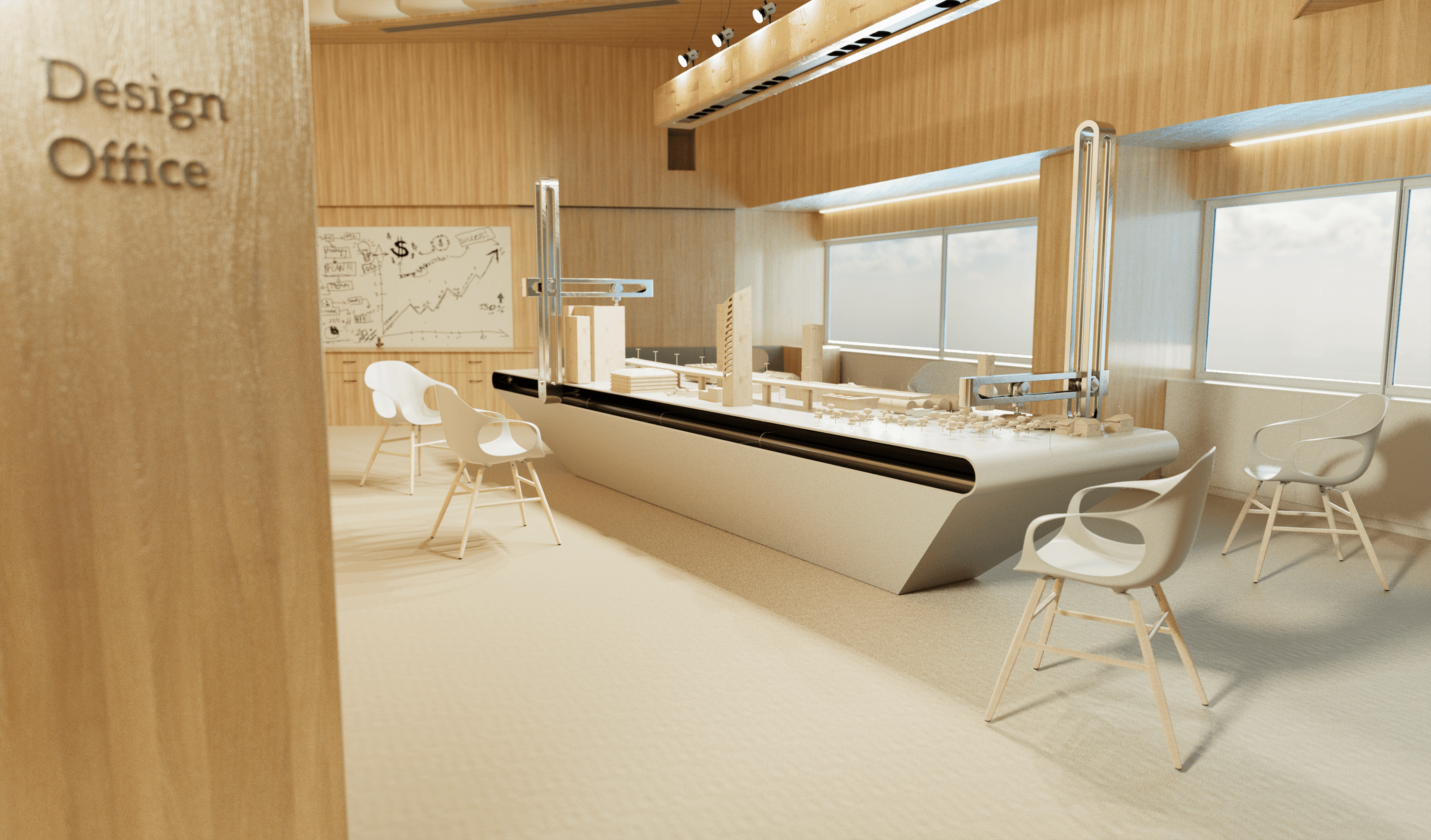
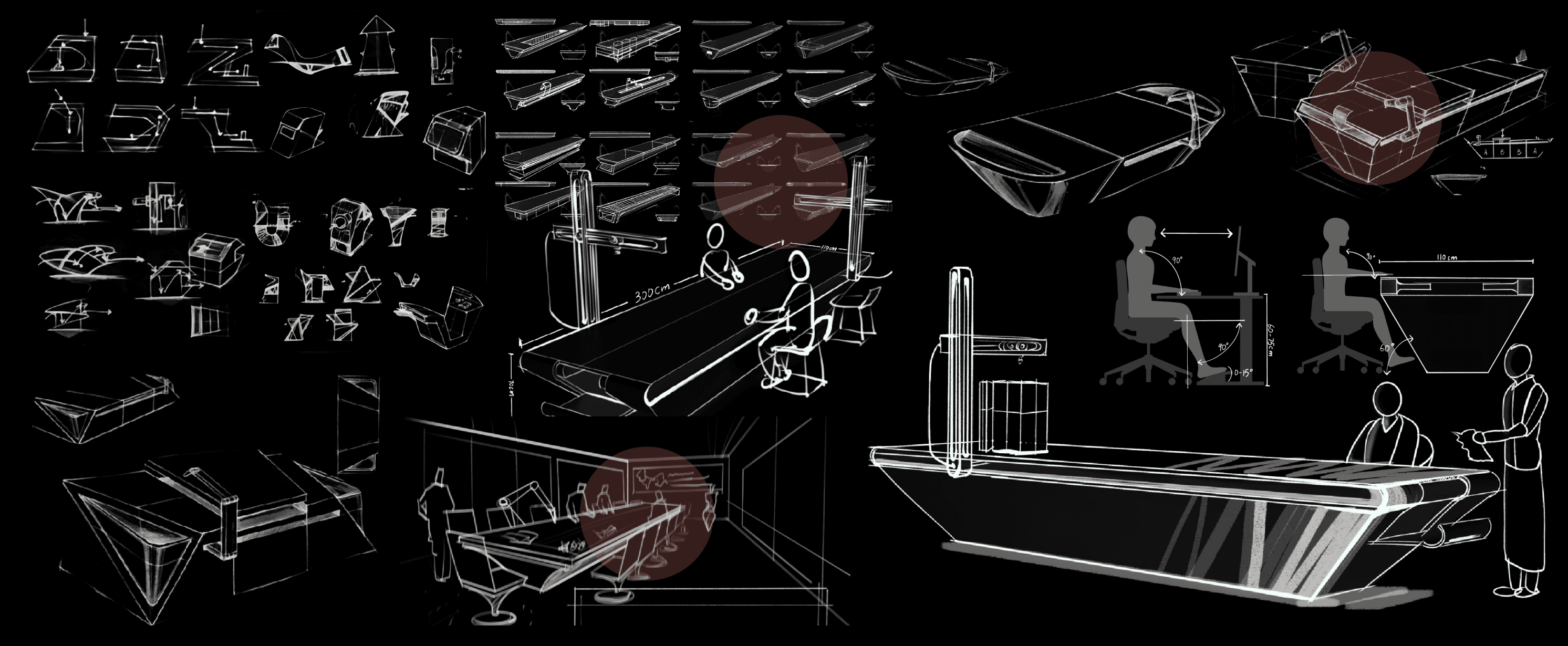
Fontana di Trevi 1.0 brings this process back into one place. Paper is no longer treated as waste, but as a temporary state within a continuous creative loop. Discarded sheets are collected, shredded, mixed, and transformed into printable material directly inside the desk.
As the material flows through the system, the desk becomes more than a workstation—it becomes a quiet machine for transformation. Noise reduction layers, internal material pathways, and modular printing arms allow making to coexist with discussion, sketching, and collaboration.
By making recycling visible and immediate, the desk reframes reuse as a creative ritual rather than an afterthought. Ideas do not end when paper is thrown away—they return, reshaped, ready to be used again.
year
2020
timeframe
2 Months
tools
Rhino/Cinema 4D
category
Personal Project
01

02

03

04

05

06

07

08


